More than 1 in 51
develop after breast cancer

We have reviewed the most cited research on (swelling that develops when the body’s lymphatic system cannot carry fluid away) from the past 20 years.121 Here are the key findings, without complicated words.
Explore the researchdevelop after breast cancer
higher risk when more are removed
removed on averageafter
after
The figures refer to patients in studies. The increase in risk compares removal of many (small parts of the immune system that filter lymph fluid) with removal of only the sentinel node.1 Surgical results refer to (an operation that removes fat through small cuts using thin tubes) with lifelong (pressure from bandages or special garments that helps keep swelling down). Follow-up extends up to 21 years.2123 Results vary between individuals.
Start where you are. Here we have brought together the research in six areas, with simple explanations and links to the studies.
What happens when fluid is not carried away? Understand the swelling, its stages and why fat can develop.
can develop after cancer treatment or be present from birth. Read about risk factors and common misunderstandings.
What does Brorson's method involve? Read about surgery, long-term results and why is essential.
From early detection and exercise to different operations. Which treatment may help at each stage?
How does affect life? Read about everyday life, infections and what studies show after treatment.
Similar symptoms can have different causes. Here we compare the conditions and explain why the right (the doctor’s assessment of which condition you have) matters.
Long-standing swelling can change. This affects which treatment may help.3
(fluid carried away from tissue by the body’s lymphatic system) collects in the tissue. The swelling is soft and often leaves a dent when pressed.3
Long-standing swelling and (the body’s response to damage or irritation in tissue) can cause fatty tissue to grow.3
In (lymphoedema that has been present for a long time and does not go away), much of the swelling may be fat. It then often leaves no dent when pressed.3
This is why bandages, and (gentle massage that helps lymph fluid move) are not always enough in later stages. They help fluid move, but do not remove excess fat.3
In the comparison involving 28 patients, excess arm volume fell by 47 % with alone and 104 % with and .18 Over 100 % means the arm became the same size as, or slightly smaller than, the unaffected arm. This refers to (the extra volume compared with the unaffected arm or leg), not the volume of the whole arm.
Number of (bacterial skin infections that cause redness, fever and swelling) per patient per year, before and after with continued . Arm: 0,47 before and 0,06 after in 130 patients.25 Leg: 0,20 before and 0,07 after in 124 patients.26
The figures describe groups of patients in studies. They do not predict what treatment can offer you. Many results come from follow-up studies, not large comparisons where treatment is randomly assigned. Results vary between individuals.2
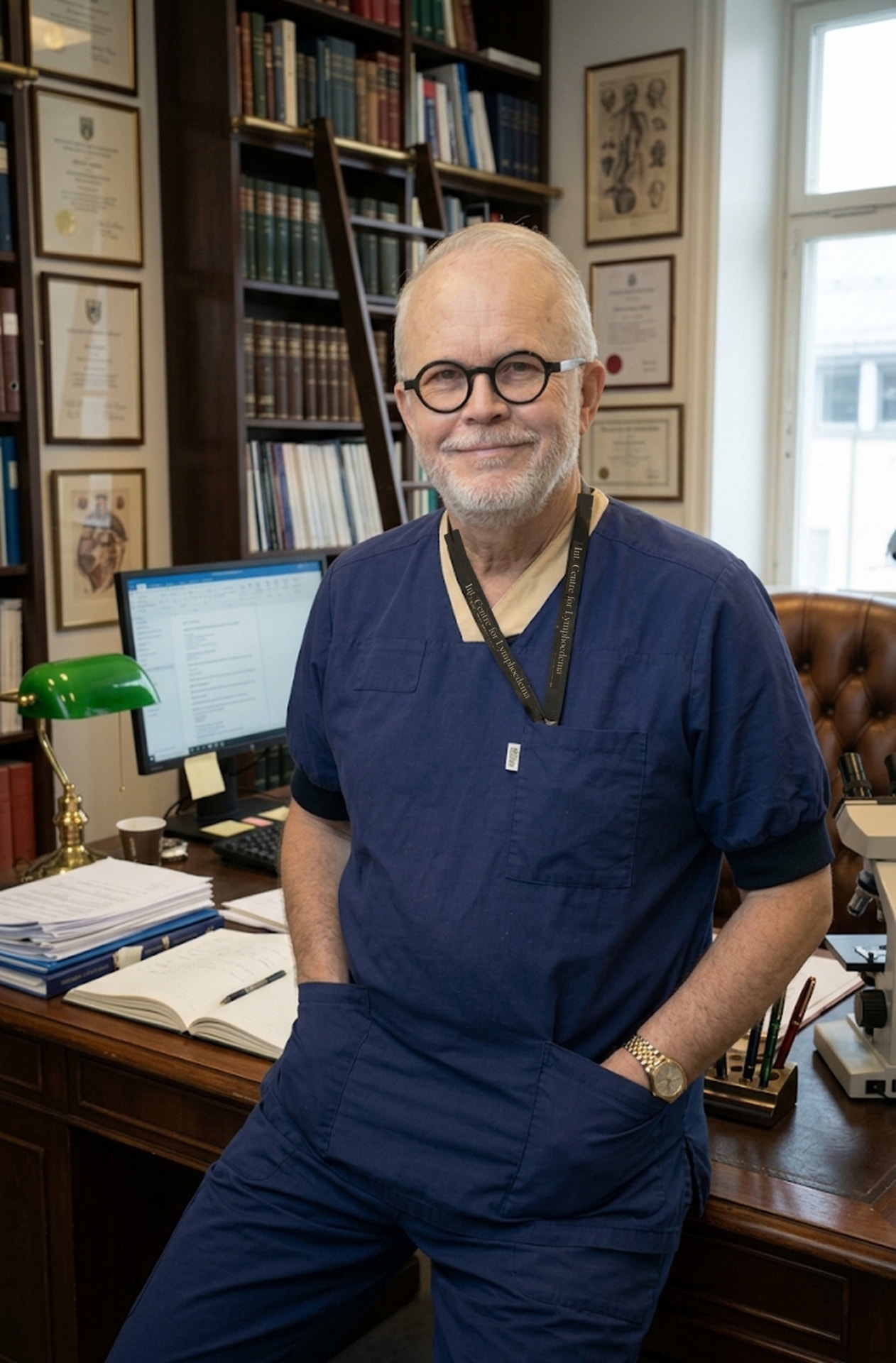
Håkan Brorson is a doctor and researcher in Malmö. Since the 1990s, he has developed and studied as a treatment for .18 The method is also used and studied in Australia, the Netherlands and the USA.293031
Read about Brorson's methodHave you lived for a long time with swelling that is not improving? We can help you find out whether treatment might suit you.